Context
Contemporary vehicles, particularly electric sedans, frequently rely on standardized visual cues to communicate performance, innovation, and identity.
These cues are often repeated across brands and segments, contributing to a saturated landscape when experienced through daily, long-term exposure.
Observation
From an industrial design perspective, a vehicle is a persistent visual presence rather than a momentary object.
Body architecture therefore functions as a communication system that shapes how emotional character and visual identity are fatigued over long-term exposure.
Project Intent
This project investigates how vehicle body architecture communicates emotional character and visual identity across the full vehicle body, and explores architectural strategies that support expressive clarity and perceptual balance within everyday commuter environments over long-term exposure.
Vehicle Body Architecture as a Communication System
Project Introduction
Design Problem
Vehicle identity is often communicated through standardized visual strategies rather than long-term perceptual experience.
Scope & Exclusion
Scope: Form-based communication and perception
Excludes: Performance optimization, branding, engineering
Research Questions
How can vehicle body architecture communicate emotional identity without causing visual fatigue over time?

Minimalist reduction → technological calm
Vehicle Body Architecture as a Communication System
Modern vehicles are designed to convey emotional character and distinctive identity in competitive markets.
Common visual strategies aim to make a strong first impression.
In daily commuter environments, these vehicles appear repeatedly in traffic, parking areas, and urban settings.
Viewed collectively, they become part of a continuous visual landscape.
Over time, the repetition of similar design cues can lead to visual saturation and reduced perceptual impact.
Frequent exposure to similar visual strategies in dense, rush-hour streets can diminish emotional differentiation through visual saturation.
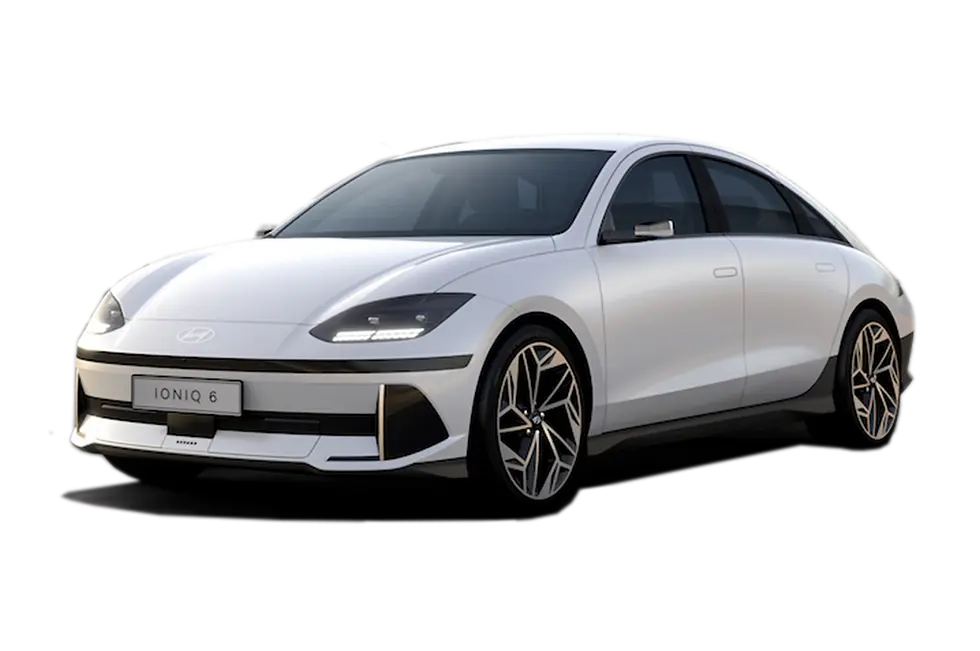
Performance-coded tension → assertive confidence

Aerodynamic continuity → emotional smoothness

Integrated tech surfaces → refined authority

Iconic Design Emergence vs. Contemporary Constraint
Historical Context: Periods of Visual Formation
Many historically iconic vehicle designs emerged during periods when manufacturers were still developing or redefining their visual identity.
During these phases, brand language was not yet rigidly established, allowing designers greater freedom to explore proportion, surface logic, and expressive intent.
As a result, emotional character was often communicated through holistic body architecture rather than through fixed facial signatures or standardized feature arrangements.

Contemporary Condition: Brand Maturity and Visual Accumulation
In contrast, contemporary vehicle design frequently operates within mature and highly codified brand systems. While these systems reinforce recognition and heritage continuity, they can also constrain formal flexibility.
To maintain distinction within established identities, designers increasingly rely on the accumulation of familiar features, heightened visual contrast, and localized exaggeration as expressive tools.
Over time, this additive strategy can lead to visual overlap, reduced differentiation, and increased perceptual load when experienced repeatedly in dense commuter environments.

Key Insight: Freedom vs. Formula
This comparison suggests that enduring emotional impact may not depend on repeating a fixed visual formula or recognizable front-end expression.
Instead, it may emerge from the ability to communicate consistent emotional intent through varied and flexible architectural strategies.
Allowing emotional character to be expressed through freer ideation, rather than through cumulative exaggeration, may help maintain expressive clarity without becoming visually overwhelming or fatiguing over time.
Closing Observation
Sustained emotional identity depends less on repeating formal cues and more on the freedom to express emotion through flexible architectural strategies.
Contemporary vehicles use distinct design strategies to communicate emotional identity. This analysis examines how different approaches converge on shared mechanisms that impact perceptual engagement over time.
Analytical Framework
To identify systemic behaviors rather than individual brand outcomes, this analysis examines three contemporary vehicles that represent different emotional directions while relying on similar architectural strategies.
Case-Based Design Detail Analysis

Mercedes-Benz EQE
Smooth Technological Authority


Visual flattening
Visual hierarchy is reduced and flattened through minimal detailing.
Repetition tolerance
Reduced visual hierarchy supports repeated exposure at mass scale.
Brand suppression
Minimized brand signals focus attention on neutral geometric form.
How Contemporary Vehicle Design Constructs Emotional Identity

Performance-Coded Intensity
Localized emotional concentration
Emotional intensity is concentrated in the front architecture through dominant grille geometry and lighting emphasis.
Contrast density
Sharp surface breaks and high-contrast transitions increase immediate visual tension and legibility.
Feature accumulation
Identity is reinforced through layered visual cues rather than proportion or holistic body architecture.
BMW i4
Minimalist Neutrality at Scale
Tesla Model 3

Visual hierarchy suppression
Surface detailing and feature hierarchy are minimized to reduce focal dominance.
Repetition tolerance
Low visual contrast supports frequent, large-scale exposure without immediate overload.
Identity neutralization
Brand expression is subdued, shifting emphasis toward generic geometric form rather than explicit emotional signaling.
Perceptual fatigue over time
When emotional identity is delivered through fixed architectural strategies, repeated exposure shifts perception from engagement to saturation.
Mercedes EQE
Continuity flattening
BMW i4
Tesla Model 3
Extended exposure to highly uniform surfaces and continuous visual flow can cause emotional identity to recede into background presence over time.
Concentration fatigue
Repeated front-dominant emphasis continuously pulls visual attention to the same focal region, increasing perceptual demand and accelerating fatigue over time.
At large scale, repeated exposure to highly neutral forms flattens emotional differentiation and reduces long-term perceptual engagement.
Neutrality saturation
Key Insight
When emotional identity is delivered through fixed architectural strategies, whether aggressive, smooth, or minimal, its perceptual effectiveness diminishes under long-term, high-frequency exposure in commuter environments.
Design Hypotheses
Toward Sustained Emotional Expression
The analysis finds that many contemporary vehicle designs rely on fixed, high-impact gestures that lose emotional effectiveness with repeated exposure, particularly in dense commuter contexts.
Rather than proposing a single solution, the project reframes this as an architectural inquiry, using hypotheses to test how redistributed emphasis, adjusted visual hierarchy, and greater expressive flexibility may sustain emotional perception over time.
The following section translates these observations into design hypotheses, investigating how emotional expression might be distributed more evenly across the vehicle body to support sustained perceptual balance over time.
Form Studies — Testing Architectural Hypotheses


Continuous Body Distribution
Front-Dominant Emphasis
Balanced, Mid-Body Emphasis
These studies isolate architectural emphasis as a variable while maintaining consistent proportion and scale.
Analytical Framework
Reviewing the three form studies reveals clear differences in how architectural emphasis shapes perception over time.
Although each variant maintains the same proportions and scale, the way visual emphasis is distributed significantly affects how attention moves across the vehicle body during repeated exposure.
The front-dominant configuration draws attention quickly and decisively, but repeatedly pulls focus back to the same area.
Over time, this concentration increases perceptual demand and can lead to visual fatigue in dense, everyday traffic conditions.
The mid-body emphasis produces a more moderated experience. By shifting emphasis toward the center of the body, attention is redistributed more evenly, creating a steadier visual rhythm that is less demanding across repeated encounters.
The continuous body distribution supports the smoothest perceptual flow. Emphasis is carried across the full length of the vehicle, reducing focal saturation and allowing the form to remain legible without demanding constant attention. This approach appears better suited to long-term exposure in commuter environments.
Based on these observations, the project moves forward with architectural strategies that prioritize continuity and distributed emphasis, using form as a means of sustaining emotional balance rather than amplifying intensity.
Synthesis
The form studies and subsequent interpretations indicate that long-term perceptual comfort is influenced less by the intensity of individual features than by how architectural emphasis is distributed across the vehicle body.
Rather than relying on isolated focal points or repeated gestures that continuously demand attention, this synthesis demonstrates a more continuous and moderated body architecture in which continuity, balanced emphasis, and controlled visual hierarchy coexist within a coherent form.
The design functions not as a finalized vehicle concept, but as an applied spatial translation of the findings, using architectural criteria as evaluative constraints to assess form decisions based on their ability to sustain emotional clarity and perceptual balance under repeated exposure in everyday commuter environments.


Architectural Translation
The resolved form was evaluated against the architectural criteria derived from the research phase.
Visual emphasis is distributed longitudinally across the vehicle body rather than concentrated in isolated features.
Low-demand surface zones are intentionally preserved to reduce perceptual fatigue under repeated exposure.
This validation confirms the vehicle body as a continuous communication system rather than a sequence of expressive events.
No front-dominate focal spike
Mid-body continuity maintained

Rear integration avoid terminal emphasis
Primary Visual Emphasis
Secondary Visual Emphasis
Low - demand surface
Low - demand surface
Resolved Architectural Demonstration


Conclusion (Research Contribution and Transferability)
This project examined vehicle body design as a long-duration communication system shaped by repeated everyday exposure.
Through comparative analysis, form studies, and architectural synthesis, it demonstrated that sustained perceptual comfort and emotional clarity are governed less by isolated expressive features than by how visual emphasis and hierarchy are distributed across the vehicle body as a whole.
Rather than treating the vehicle as a collection of attention-driven features, the project reframes body architecture as a continuous perceptual structure. The resulting framework proposes distributed architectural emphasis as an alternative to front-dominant and feature-centric strategies, prioritizing continuity and hierarchy to support long-term visual balance.
Research contribution:
Perceptual fatigue reframed as a structural design issue
Distributed emphasis validated as a sustained perceptual strategy
Architecture evaluated through constraint rather than expression
Vehicle form understood as a long-duration communication system
Transferability and application:
Urban commuter vehicles
Autonomous vehicle bodies
Public and institutional mobility systems
Long-term human–machine interface environments